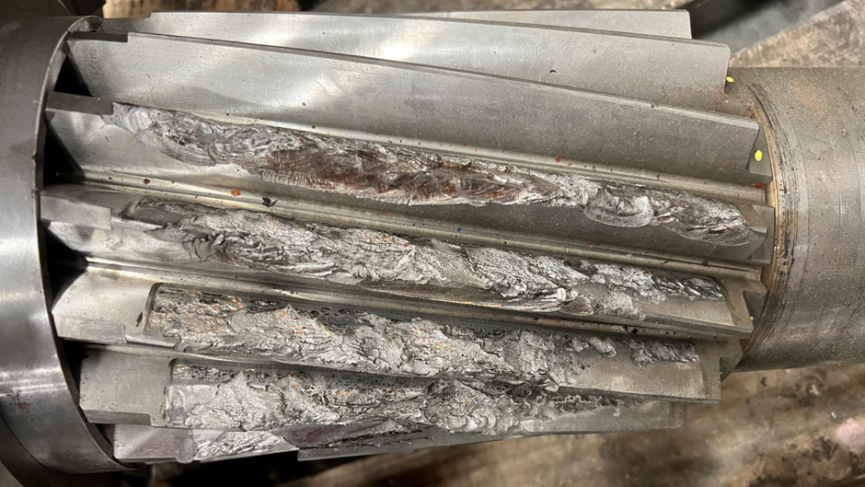
When industrial gearboxes fail, the usual solution is often to replace damaged parts and return the equipment to service. According to an article in Gear technology magazine, gearbox repair specialist Luftex, takes a different approach, focusing on understanding why failures occur so they can be prevented in the future.
Established in 2015 in Lufkin, Texas, by industry veterans Scott Franks and Albert Stokley, Luftex was built around a philosophy of engineering-led repair. Every gearbox is first inspected and analysed before any manufacturing work begins, ensuring that the root cause of a failure is identified rather than simply treating the symptoms.
This methodology forms the basis of the company’s five-pillar model: Inspect, Analyse, Educate, Advise, and Manufacture.
Inspection includes both field assessments of operating equipment and detailed examinations of failed gearboxes. Engineers then analyse designs against recognised standards and evaluate how equipment is actually being used. This often reveals opportunities to improve gear geometry, bearing arrangements, lubrication systems, or overall reliability.
Following its acquisition by Sumitomo Drive Technologies in 2019, Luftex expanded its focus on education, offering training programmes that help maintenance teams improve installation, alignment, lubrication, and operating practices. These programmes frequently identify factors contributing to repeated failures.
One example involved a steel plant experiencing recurring gear tooth failures every 18 months. Initial investigations found no obvious design issues, but deeper analysis revealed a bearing arrangement that allowed shafts to misalign under load. After redesigning the bearing and housing configuration, the problem was eliminated, and the gearboxes have continued operating successfully for more than a decade.
Luftex also applies modern manufacturing techniques to enhance repaired equipment, using advanced gear grinding processes and improved material specifications to increase performance and service life.
The company’s experience highlights an important lesson for industry: effective gearbox repair is not simply about replacing worn components. By combining detailed engineering analysis, customer education, and modern manufacturing, organisations can improve reliability, reduce downtime, and achieve longer-lasting solutions.
The Doctor Is In